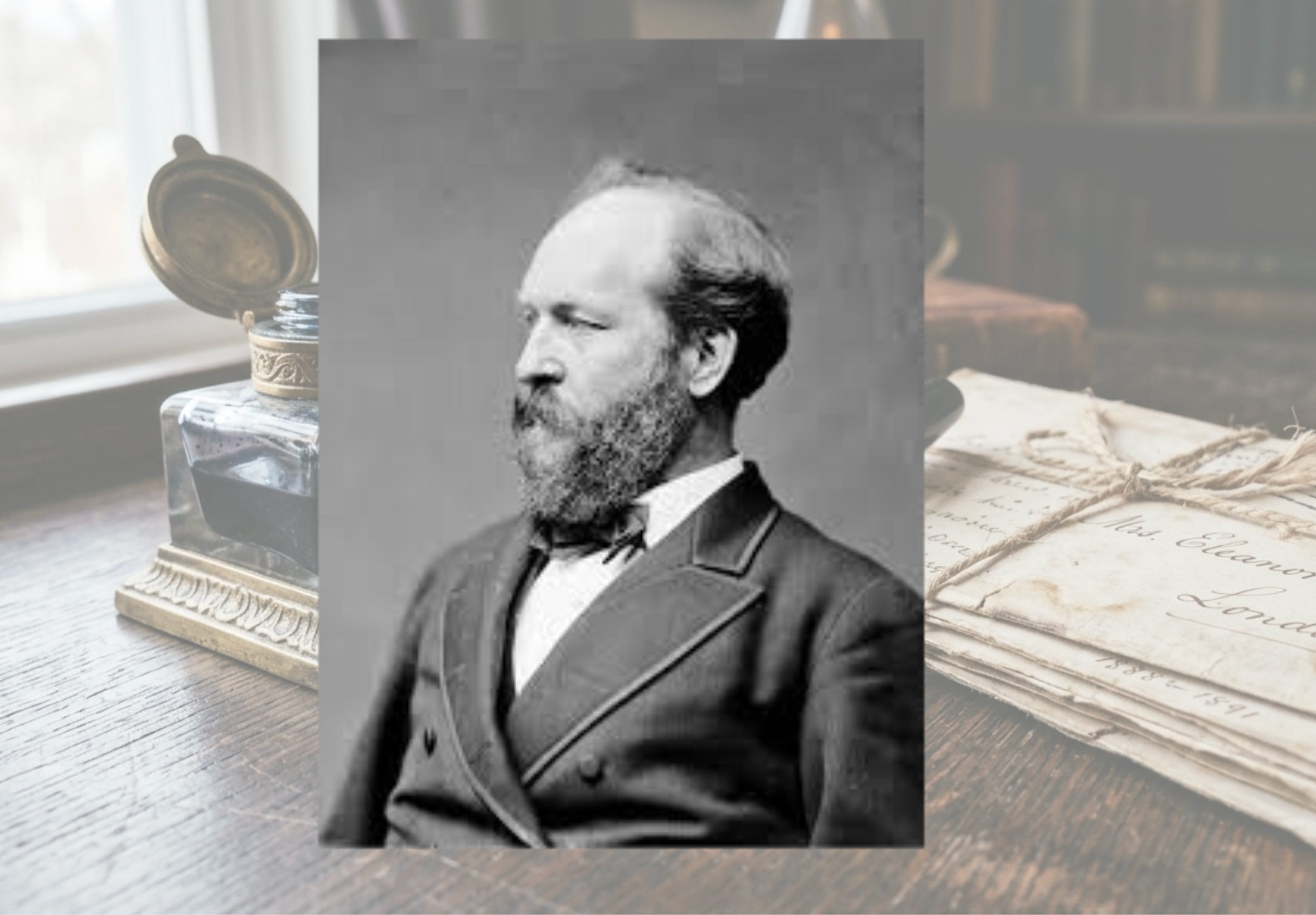
When we talk about presidential assassinations, we talk about Lincoln and JFK. Some might also mention the many failed attempts on Trump, but few mention James A. Garfield.
Garfield was a huge loss to the political landscape, and had he lived, he could have accomplished much in his career. Sadly, a combination of a lone gunman and an incompetent doctor saw that this was never to be.
Garfield’s Rise
It was the year 1880, and the US stood at a crossroads. Was it possible to give enslaved people full rights as citizens? The existing patronage system meant that government jobs often went to the most faithful rather than the best qualified. Could this change?
It was at the Republican National Convention in June, when James Garfield addressed these questions, demanding that the nation honour its promises to all. His speech was eloquent and commanded the respect of hundreds of delegates who roared their approval. Having heard the speech, they wanted one additional thing from Garfield: they wanted him to be their presidential candidate.
Initially, Garfield tried to refuse the nomination, insisting he had no desire to be president, which was the very factor that made him a perfect candidate. Once he agreed, Garfield; who had risen out of poverty as Abraham Lincoln had, and performed heroics on the Union side in the Civil War, was unstoppable.
He became the country’s 20th president in November 1880. He promised progress and reform; however, this was not to be. Just four months after his inauguration, he was shot by Charles Guiteau.
Charles Guiteau
Guiteau had exhibited signs of mental instability long before he pulled the trigger. Despite this, records show that he was never treated or confined during this time; psychiatry was in its infancy.
Guiteau had a long history of failed ventures. He had failed as a lawyer, a journalist, and a preacher. When he joined a free-love commune, he even failed at this, the women refused to sleep with him. Yet, he always believed God had put him on the planet for a higher purpose.
He became obsessed with Garfield after he was nominated. Guiteau travelled to New York in the summer of 1880, determined that his destiny meant playing a crucial role in Garfield’s victory.
Guiteau harassed the staff at Garfield’s New York campaign office until he was allowed to give a single, rambling speech endorsing the candidate.
The Patronage Conflict
Garfield was vocally opposed to the system of handing lucrative posts to supporters of candidates; he believed people should earn their right in the cabinet. Guiteau, not surprisingly, believed in the patronage system fiercely. He expected to be handed a good job for supporting Garfield in the election. Ambassador to France was his first choice.
Garfield had more to worry about than one lone job hunter. He had embarked on an ambitious agenda including upgrading the US Navy, expanding trade with Latin America, and advocating for civil rights.
He appointed the once-enslaved social reformer Frederick Douglass as Recorder of Deeds for the District of Columbia, making him the first African American to hold a prominent federal office.
Deluded, Guiteau travelled to Washington and appeared at the White House every day to insist he be given a job. He only ever came face-to-face with Garfield once during that time, when he handed him a copy of his election speech and had subtly scrawled “Paris Consulship” on it.
His strange manner and erratic outbursts led to him being blocked from entering the White House. When he was told by Secretary of State James Blaine that he would never get a position in Garfield’s administration, he sought to take revenge.
The Assassination
Guiteau was broke, with no money or prospects, so he retreated to a shabby boarding house. It was whilst lying on the bed there that he said he had a moment of divine inspiration: Garfield was not a true Republican, unlike his vice president. He concluded there was only one thing to do—assassinate Garfield and leave Chester A. Arthur to take his place.
To plan the attack, he stalked Garfield for weeks. The President was not a difficult target as he preferred to walk everywhere, normally unprotected. It is hard to imagine why he thought this was safe, as John Wilkes Booth had killed Lincoln just sixteen years before.
Guiteau finally got his chance. As Garfield strolled into the Baltimore and Potomac railroad station in Washington on 2 July 1881, Guiteau shot him in the back. Garfield was on his way to Williams College, where he planned to introduce his sons to his alma mater. He was walking with Blaine at the time, the very man who had shattered Guiteau’s illusions of a job.
The fatal shots came from a .44 British Bulldog. Guiteau had purchased it because he thought it would look impressive in a museum.
Medical Treatment
Garfield may have survived this assassination attempt, if it had not been for the actions of one arrogant physician. Dr Doctor Bliss insisted that he was the only doctor to supervise the President’s treatment after he had been shot.
Bliss was very critical of the latest antiseptic methods for treating wounds. Instead, he chose to treat the gunshot with unsterilised instruments, even putting his bare finger into the hole at one point to feel for the bullet near Garfield’s spine.
After a time, Bliss did consent to use an early type of metal detector designed by Alexander Graham Bell. The bullet was thought to be near the President’s pancreas, but due to Bliss’s interference with the device, it could not be properly located or removed. However, it is doubtful he would have survived even had the bullet been removed, as infection had already taken hold.
Garfield’s last days were a time of great suffering as he battled constant pain, fever, and discomfort under Bliss’s care.
Death of the President
Garfield died of sepsis on 19th September 1881 in a cottage at Elberon, a village on the New Jersey shore. His wife lay nearby, herself recovering from a severe bout of malaria.
On the day Garfield died, Guiteau wrote to the new President, Chester A. Arthur: “My inspiration is a godsend to you and I presume that you appreciate it.... Never think of Garfield’s removal as murder. It was an act of God, resulting from a political necessity for which he was responsible.”
At his trial, the jury took one hour to return a guilty verdict. They sentenced him to be hanged. He climbed the scaffold on 30th June 1882, still convinced he had done God’s work.
Garfield’s Legacy
Despite his short life, dying at only forty-nine, he made a huge difference to the lives of Americans. His death galvanised demands for civil service reform. The public recognised that had Guiteau not had delusions of a job he was owed, he may not have assassinated the President.
President Arthur, mourning his able and likeable predecessor, renounced the corrupt spoils system that had elevated him. Congress passed the Pendleton Act in 1883, creating a merit-based standard for federal government employment. It is a system that still yields results to date.
Historians still question what James A. Garfield could have achieved had he not been targeted by an assassin. Most believe that he would have been one of the most remarkable presidents in history with his mix of intellect and forward thinking. As it is, he has been relegated to an obscure footnote in history, shadowed even in his assassination.
Be sure to check out our deep-dive article on Monday, when we look at the British Prime Ministers who have been assassinated.
Subscribe today: I spend hours digging through archives, old testimony, and forgotten files to bring these cases to life. Free posts are just the beginning, paid subscribers keep this work possible and get access to my full vault of articles.
If you’ve enjoyed this story and want to see more, please consider upgrading. It’s readers like you who keep Murder Mayhem UK alive.


Arthur served out the rest of Garfield's term before retiring from politics. As with the rejection of the "spolis" system, he logically carried out some of the same initiatives Garfield would have done, although he was less memorable as a personality.