

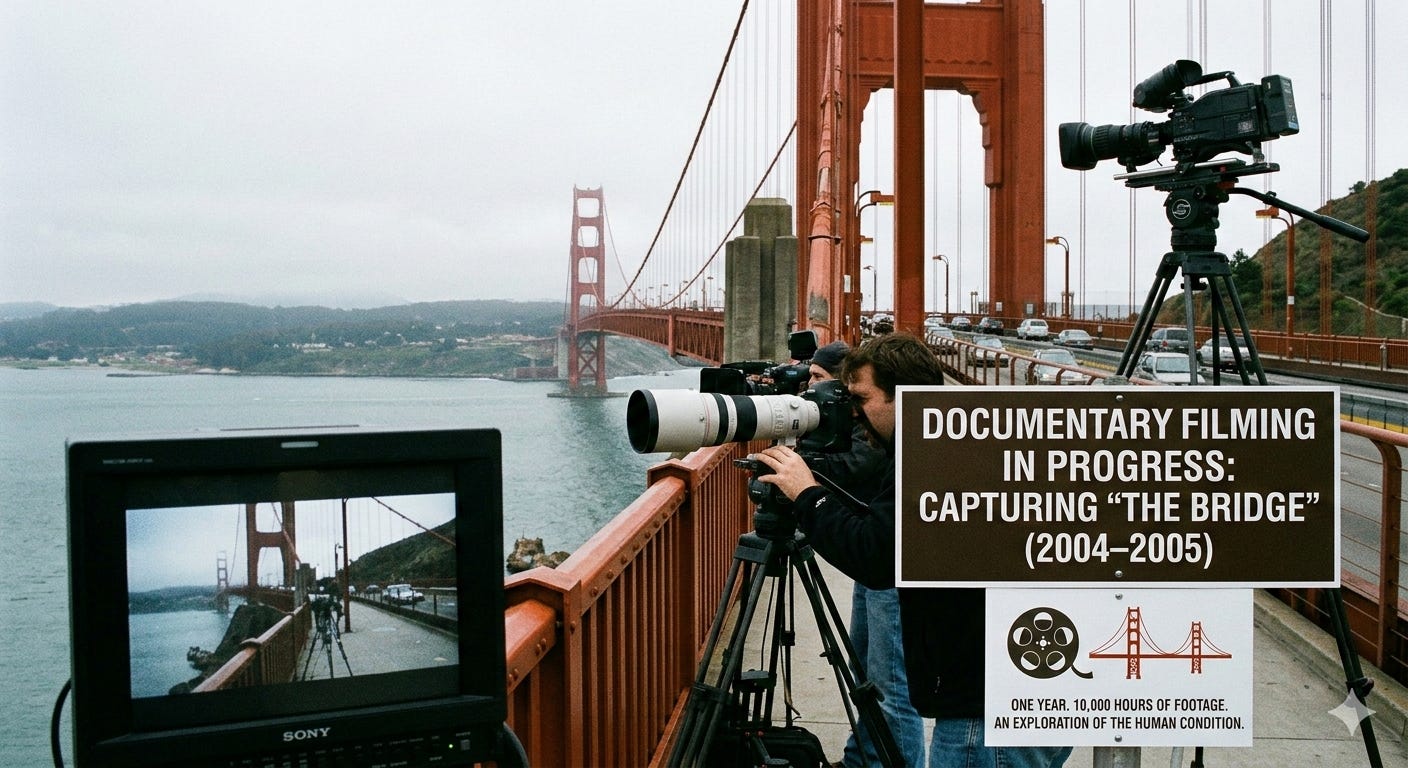
In 2006, a documentary film by Eric Steel spanned one year of filming at the Golden Gate Bridge in San Francisco. The documentary filmed every part of the bridge, from the people who crossed it to several suicides that occurred there.
The documentary did not stop there, however; it then interviewed the families of these victims and identified the people who had taken their own lives. This led many to question the ethics of the film and whether the filmmakers had a right to capture the last desperate moments of these people’s lives.
The Golden Gate Bridge
The bridge first opened in May 1937 and holds the title of the most popular suicide site in the world. The fall sends people plunging 245 feet at 75 miles per hour into the waters of the bay. It is the equivalent of a speeding truck hitting a concrete building. The fatality rate for jumpers is 98%.
For the rare 2% who survive the impact, their accounts are harrowing. Survivors, such as Kevin Hines, have famously noted that the second their hands left the railing, they felt an immediate and total sense of regret.
Despite this notoriety, little was done for decades to prevent jumpers. While most bridges of this size are fitted with suicide barriers, these were not fully added to the bridge until 2018.
Program Idea
Steel developed the idea after reading an article in The New Yorker about some of the 1,300 people who had thrown themselves from the bridge since it opened in 1937. He said he tried to imagine their last moments; he thought of the bodies he had watched falling from the World Trade Centre towers on 11th September 2001.
