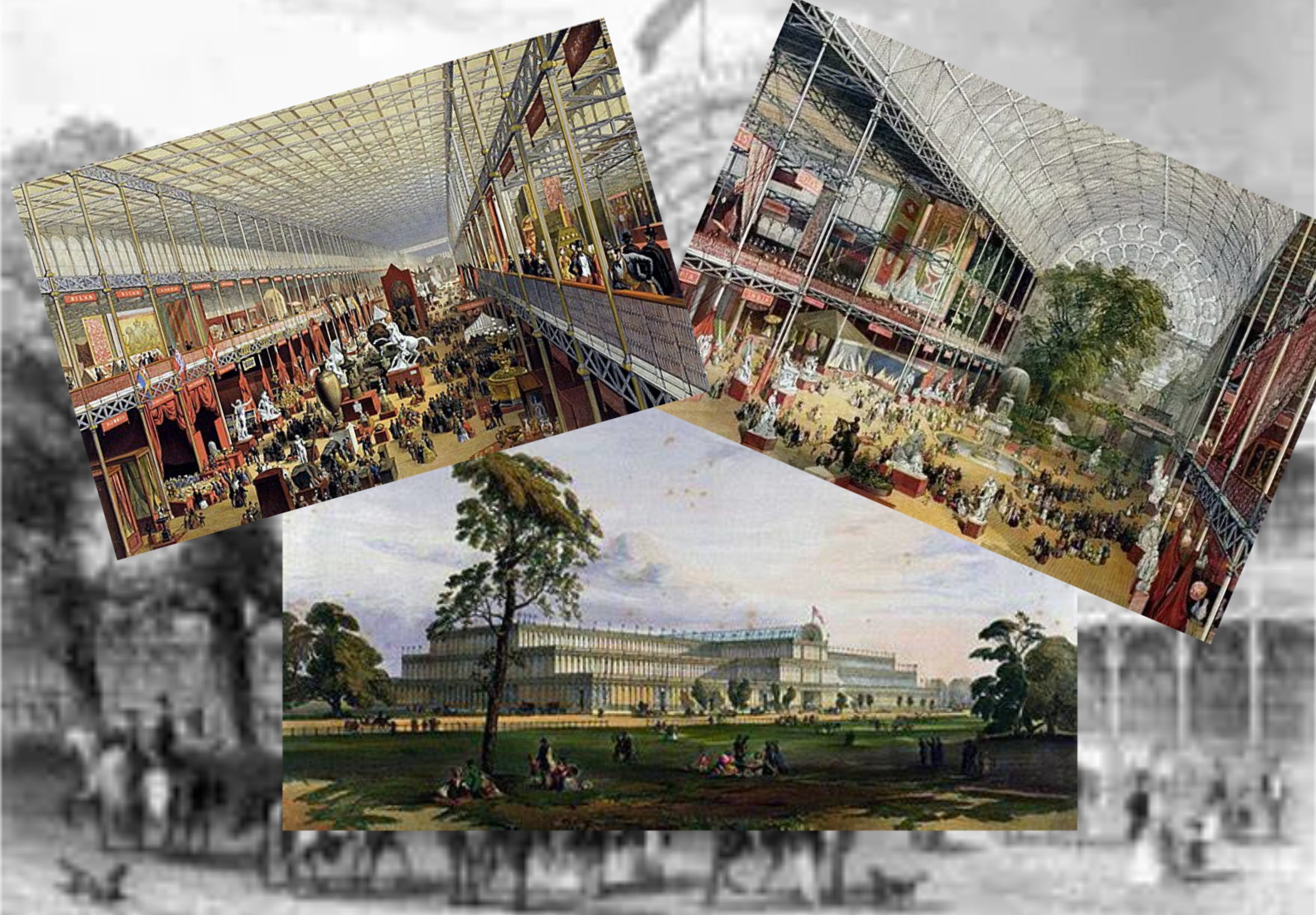
The Great Exhibition of the Works of Industry of all Nations
One of the greatest moments of the Victorian era.
The weather was bright on the day The Great Exhibition opened. All the dignitaries gathered to catch a glimpse of Queen Victoria and Albert; this was the culmination of many late nights for Albert.
The breeze blew through the trees of Hyde Park. Soon the doors would open to one of the biggest examples of the British Empire’s power. All would be welcome regardless of status and wealth; what they would glimpse would be a look into the future of the world.
The Great Exhibition
There is no doubt that the exhibition was the most successful and memorable event of the 19th century. The influence it had on culture would not be seen in this country again.
Prince Albert had been running much of the monarchy’s administrative affairs whilst his wife, Victoria, had nine children. He frequently stood in for his wife during meetings and royal functions, but the exhibition was his project alone. Working with civil servant Henry Cole, they designed a festival which would celebrate modern design whilst promoting Britain as an industrial and imperial power.
Previously, the two organisers had been impressed with the scale of the 1849 Exposition in Paris. They knew they had to host a larger event with a broader international scope. What better way than to showcase not just the inventions of Britain, but those of other countries held in the empire?
If the Great Exhibition were going to showcase 100,000 products from all four corners of the world, then they would need an impressive building to house them. No one would have foreseen exactly how impressive that building would be.
Crystal Palace was a dream that became a reality.
Crystal Palace
Crystal Palace was a purpose-built glass and iron building which, in itself, was an engineering achievement. No other building had used glass as a primary building material on such a scale before.
The biggest challenge was how to design and construct a building large enough to house the exhibition. The added challenge was that they had just twelve months to build it.
A competition was run for people to design the building; the organisers received nearly 250 entries. None of them was good enough, and all were rejected.
In walked Joseph Paxton, the head gardener at Chatsworth Estate, with a proposal which turned many heads. Why not design a glass building similar to those he had designed for his employer, the Duke of Devonshire?
He suggested a gigantic pre-fabricated building made of iron and glass; he nicknamed it “Crystal Palace”. It was a name and design that stuck.
In just nine months, the building was constructed using 2,000 workers. It was built using a modular system, allowing the cast iron parts to be fabricated in Birmingham, the same city that also produced the 293,000 panes of glass, the largest ever produced. These were then shipped to London on the newly built railway. Even by modern standards, it was an impressive undertaking.
The size of the building should not be underestimated. It was tall enough to house two full-grown elm trees that could not be moved, and it contained a pipe organ alongside an eight-metre glass fountain.
Opening Day
On 1st May 1851, Queen Victoria opened the exhibition. She wrote in her journals about how immensely proud she was of her husband’s achievement. The exhibition would run from May to October and would see six million people visit from all classes—representing one-third of the population. The sheer scale of the success silenced many of Albert’s critics, especially those in parliament who thought it was a ludicrous idea.
“Shilling days” were introduced a few weeks into the opening of the exhibition. These reduced entry prices from Monday to Thursday, meaning most could afford to go. It also had its share of famous visitors; Charles Dickens was a frequent visitor and Charlotte Brontë commented: “It is vast, strange, new and impossible to describe.”
The newly constructed railway was not only responsible for transporting the goods but also meant people could travel from all over the country to visit London. Factory workers, agricultural labourers, and East Enders mixed with foreign dignitaries and visitors from around the world.
Once inside, they were treated to a variety of sights.
Inside Crystal Palace
The exhibits were broadly grouped into four areas: raw materials, machinery, manufactures, and fine arts.
A stroll along one of the wings could take you past a medley of fabrics, furniture, locomotives, and musical instruments. The exhibition was designed to contrast Britain’s technological and industrial superiority with that of the rest of the empire.
One of the greatest highlights of the exhibition included the fountain at the centre, which stood eight metres high and was made from four tons of pink glass.
The imperial displays presented a view of “exotic” and “underdeveloped” economies, implying a racial hierarchy to further justify imperialism. For example, the Caribbean section showcased raw agricultural produce like sugarcane to represent Britain’s exploitation of its expanding empire’s resources.
The Indian section introduced visitors for the first time to the richness and quality of Indian textiles, but was particularly remembered for the howdah which was displayed on a stuffed elephant.
The Koh-i-Noor diamond, the largest known diamond at the time, which had been acquired by the British after the victory in the Second Anglo-Sikh War was also on display. While Queen Victoria was its recipient, its presence in the exhibition served as a symbol of Britain’s colonial past.
The vast number of visitors helped spread awareness and support for the country’s imperial ambitions amongst the public. It is worth considering that three years previous to the exhibition, the French Revolution of 1848 had seen King Louis Philippe I overthrown. He had actually fled to England and been granted asylum by Queen Victoria, so it is hard to imagine this was not on her mind when the exhibition was suggested.
The Financial Success of the Exhibition
The exhibition was officially closed by Prince Albert on 15th October 1851. It was a huge commercial and economic success, making a profit of £186,000—the equivalent of roughly £20 million in today’s money.
The profits were used to fund the Victoria and Albert Museum, the Science Museum, and the Natural History Museum. They also established an educational trust to provide grants and scholarships for industrial research.
Shortly after the exhibition, Crystal Palace was removed from Hyde Park and reassembled in Sydenham Hill, then a part of the Kent countryside. This was no cheap task: the relocation cost over £1 million. Here it housed concerts, festivals, exhibitions, and permanent displays of botany and art history.
However, despite its earlier success, Crystal Palace was plagued with financial problems and was declared bankrupt in 1911. In 1936, it was destroyed in a fire.
The exhibition itself set the precedent for the many international exhibitions which followed during the next 100 years. It inspired a long succession of international fairs in other cities, including Paris, Dublin, New York, and Vienna.
In a strange twist, one of the later exhibitions, known as the World’s Fairs, was hosted in Chicago at the same time H.H. Holmes was building his “murder castle” in the same area. H.H. Holmes would later be accused of being Jack the Ripper, something I do not believe, but there is a part of me that wonders whether these two serial killers once wandered the halls of the Great Exhibition at the same time.
Be sure to check out our deep dive article on Monday into another Victorian legend, Robert Peel, who died in the most tragic of ways one year before The Great Exhibition.
Subscribe today: I spend hours digging through archives, old testimony, and forgotten files to bring these cases to life. Free posts are just the beginning, paid subscribers keep this work possible and get access to my full vault of articles.
If you’ve enjoyed this story and want to see more, please consider upgrading. It’s readers like you who keep Murder Mayhem UK alive.


