Philippe Sands’ The Ratlines profoundly influenced my research. His narrative centres on Otto von Wächter, a high-ranking SS Governor who fled to South America to escape prosecution.
Before reading this account, I remained naive about how many high-level Nazi members escaped persecution by trading information to other countries. This moral compromise has fascinated me as I investigate World War II.
Operation Paperclip and The Ratlines
Historians distinguish between the official recruitment of scientists and the clandestine escape of war criminals.
Operation Paperclip (originally Project Overcast) represented a formal American military race against the Soviet Union to seize German scientists. The US government decided that technological superiority would dictate strength in the Cold War.
In contrast, The Ratlines functioned as a series of escape routes, often facilitated by clergy or sympathisers, that spirited Nazis like Otto von Wächter, Josef Mengele, and Adolf Eichmann toward South America. While Paperclip brought “useful” assets to the US, the Ratlines allowed “wanted” men to vanish. But, were they so different?
The Recruitment Race
By the spring of 1945, Allied forces closed in on Nazi Germany. As the war’s end became imminent, US officials planned for the post-war world.
They realised America must secure Germany’s best scientific minds to fuel their own advancement.
Recruiters launched Operation Paperclip, naming the program after the clips they used to earmark certain candidates’ files. In The Nazis Next Door: How America Became a Safe Haven for Hitler’s Men, Eric Lichtblau notes that recruiters vetted scientists to determine if they were Nazi Party members or sympathisers, officially, at least.
In practice, officials “placed paperclips at the top of security dossiers for the scientists that interested them,” signalling that investigators should only conduct a cursory review of their records.
Most of these scientists belonged to the Nazi Party or prohibited groups like the SS. Although the US originally intended to bring these experts over for a short period to help win the war against Japan, the program continued long after August 1945.
American officials argued they needed to seize Third Reich technologies, which often surpassed US inventions, to deny them to the Soviet Union. This “short-term project” quickly evolved into permanent immigration.
Projects and the British Connection
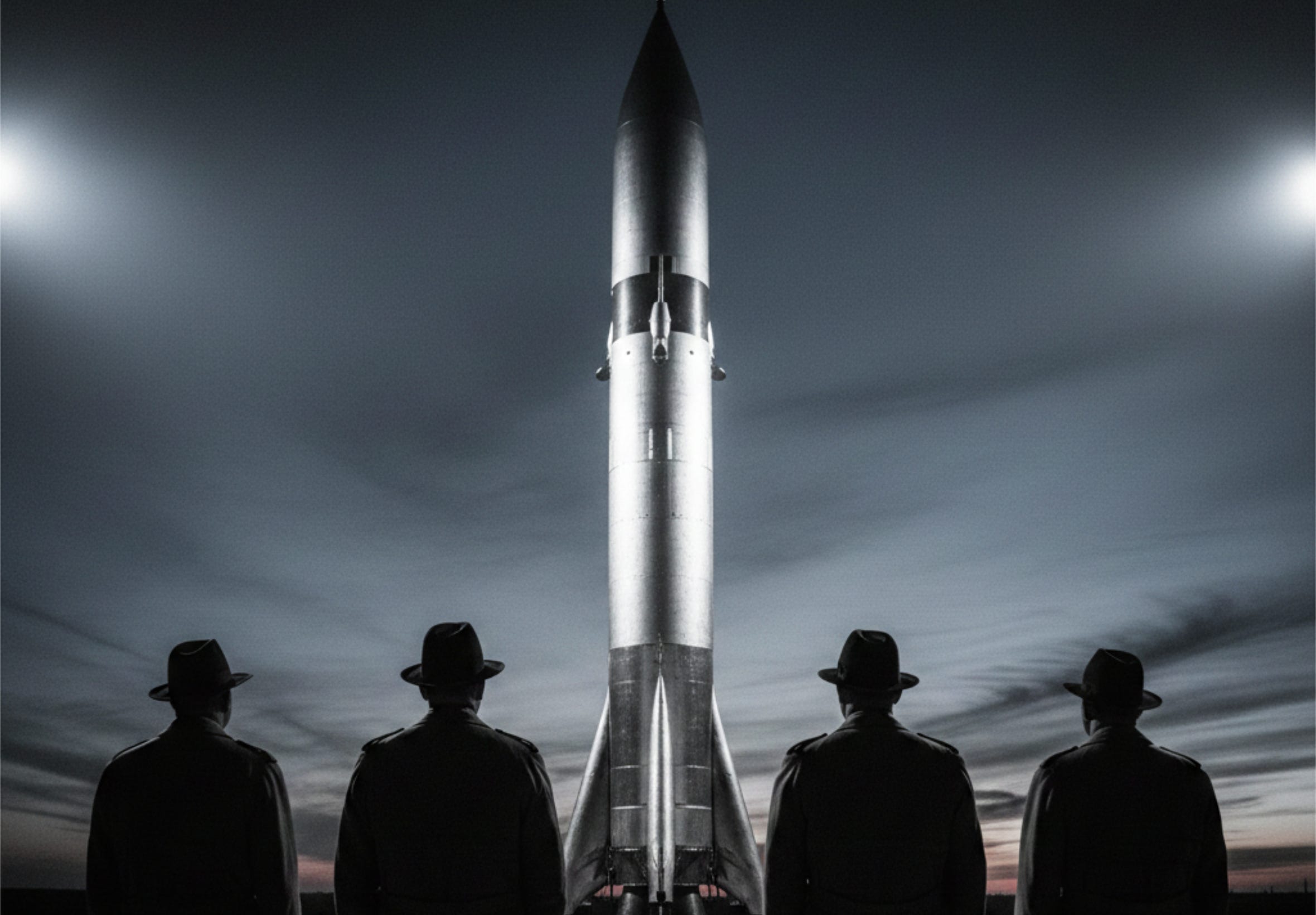
These German scientists worked on several critical projects. Dr Wernher von Braun, a party member and SS officer, developed the V-2 ballistic missile. However, von Braun built this expertise through the murderous exploitation of concentration camp prisoners.
The US Army classified this information and moved von Braun and 125 colleagues to Fort Bliss, Texas. This group helped the Americans launch V-2s and early cruise missiles. By 1950, the team moved to Alabama to spearhead the development of nuclear-armed missiles. Ten years later, this division became the heart of a new civilian agency: NASA.
The US was not alone in this pursuit. The United Kingdom operated its own version, known as Operation Surgeon. The British government sought to exploit German aeronautical research and recruit specialists to maintain their own military edge, proving that the hunger for Nazi technology crossed many Allied borders.
Other Nazi members also hid their pasts in plain sight. Kurt Debus, a former SS member, eventually served as director of the Kennedy Space Center.
Hubertus Strughold pioneered space medicine, but after his death, the world learned he conducted medical experiments on prisoners in concentration camps. Those in charge likely knew this; they prioritised knowledge over the human cost of its acquisition.
Was it Worth It?
Project Paperclip undoubtedly accelerated American technology, rocket development, and spaceflight. Yet, the program exacted a heavy moral price: the deliberate whitewashing of Nazi records.
“The public history of many of the famous names was whitewashed from the start,” writes Brian E. Crim. He notes that intrepid journalists in the 1970s and 80s finally unearthed the details of Paperclip’s “deliberately shoddy vetting process.”
While some scientists entered the US through Paperclip, others used The Ratlines to flee. Men like Josef Mengele, Adolf Eichmann, and Franz Stangl escaped to lead prosperous lives in hiding.
The program remains a controversial chapter in American history.
I think the lasting impact on American science is less than people imagine. Wernher von Braun saved the U.S. a few years of research and development when it came to missiles, but many experts question just how necessary the rocket team was to help the U.S. space program. - Brian E. Crim
Be sure to check out our deep dive article on Monday about another World War II Conspiracy.
Until next Wednesday: Stay safe, stay curious.


