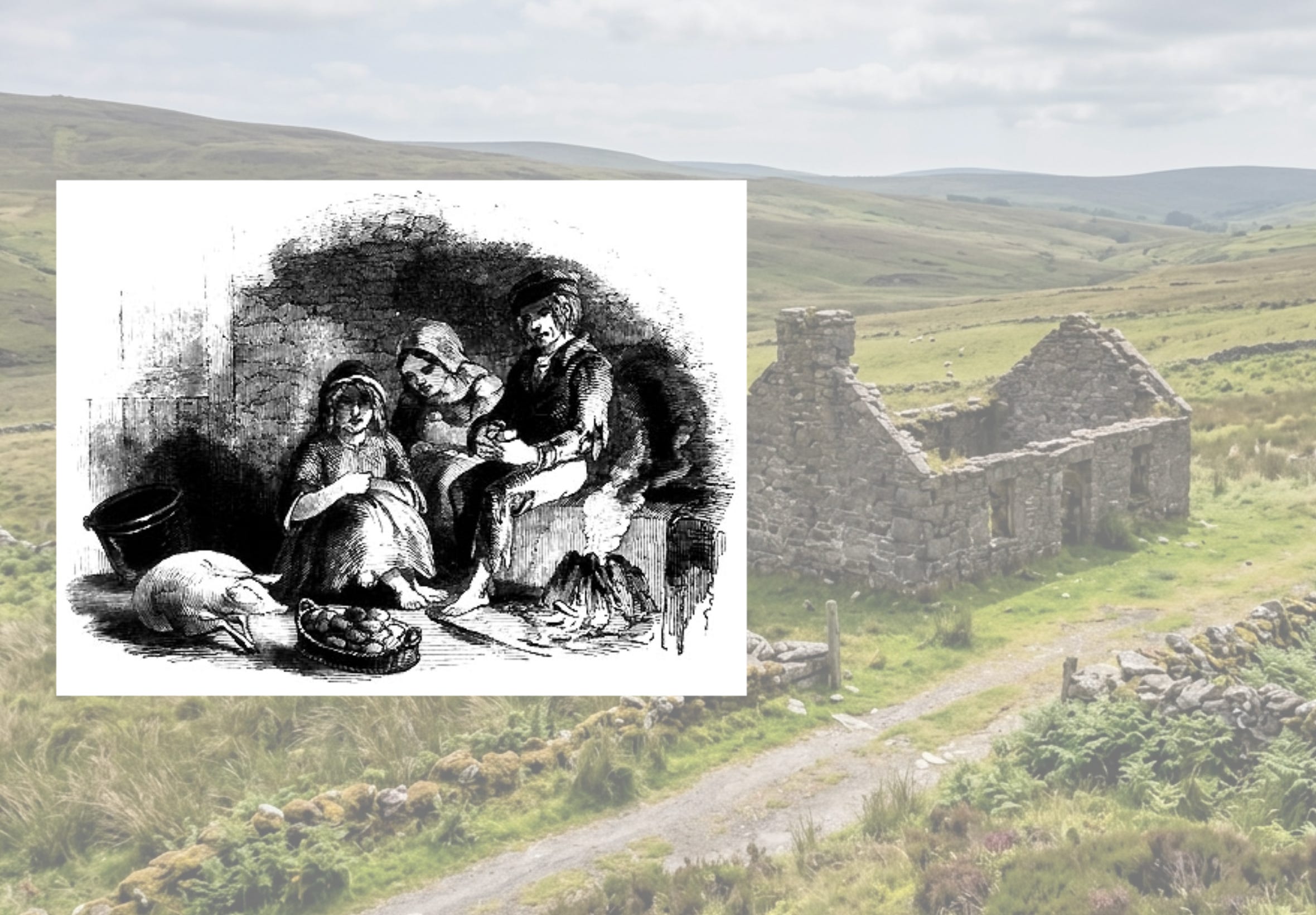
The Irish Potato Famine was the worst in Europe during the 19th century. Had the British government acted differently, it is without question that they could have saved lives.
The famine not only explains the historic animosity between Ireland and England but also profoundly changed the culture and demographics of many countries, including the USA.
Causes
The famine spanned the years 1846 to 1849; however, the failure of a large percentage of crops in 1845 was the initial problem. In the 1840s, rural inhabitants in Ireland were desperately poor, and 80% of their food came solely from the potato.
The British market took most of the cereal grown in Ireland for themselves at inflated prices, which left potatoes as the primary accessible source of food.
The humble potato was easy to grow in the Irish soil. It was a hardy food that could withstand the weather and yield large crops. Irish landowners would allocate small, private plots of land within their farms to labourers so they could grow their own food. These small plots of land were enough to sustain an average family.
Although not an extensive diet, this system worked well for the poorer families until the potato crop was hit by Late Blight Disease. The lack of variety in the potato crops meant that the disease travelled fast.
Blight destroys both the leaves and the edible roots of the potato and is caused by a type of water mould. The moist weather of 1845 helped it spread to an epidemic level by 1846. Within two weeks, the crops had rotted and were inedible. The famine would last another three years.
It had been raining a lot, even more than usual for Ireland. In October 1845, almost overnight, a dense blue fog settled over our puddled potato fields. An odour of decay permeated the air. When the wind and rain died away, there was a terrible stillness. The potato crop was ruined, destroyed (we learned later) by the fungus Phytophthora infestans. - John David Cantwell
Incidentally, blight disease appeared again in history in 1946, destroying half the tomato crop in the USA.
British Response
During the 1800s, Ireland came under British rule. It was part of the British Empire, which clearly puts into perspective how bad their response was. At best it was inadequate; at worst, criminal.
The government initially donated to and invested in soup kitchens during the first wave of the famine. They gave the Irish £7 million. However, to put this into context, it was one-tenth of the money they raised a few years later for the victims of the Crimean War.
Sir Robert Peel attempted to abolish the Corn Laws that were crippling Ireland for years. In 1845, Peel recognised how the laws stopped cheaper corn from getting to starving people and realised that a humanitarian disaster was inevitable. Early in 1846, he attempted to repeal the Corn Laws to alleviate the famine. He faced a bitter rebellion from other members of his party led by Benjamin Disraeli. They argued that Peel was betraying his own party and the wealthy landowners who elected him. He was forced to resign.
Enter John Russell, as Prime Minister, who had a completely different outlook. He maintained the exports of grain and stated that he would not be sending aid to Ireland; they should rely on their own reserves. Russell’s government dismantled much of Peel’s food relief system. After all, they believed the Irish were to blame due to their high Catholic birth rate.
They argued that private enterprise and local Irish property owners should bear the burden of the crisis; the landowners should feed their workers. This started an even bigger cycle of poverty. Workers could not pay their rent as they starved, which meant that landowners no longer had an income to support them. Workers and tenants were promptly evicted.
By 1847, when the famine reached its peak, their answer was to argue that the 1834 Poor Law, which was established in Ireland in 1838, should be used. The workers should be sent to the workhouses—workhouses that were severely overcrowded and left them labouring under horrific conditions.
In 1848, when the crop failed again, people took to the streets of Dublin to cry out for food. The British Parliament was so nervous about the possibility of rebellion that it suspended habeas corpus so that people in Ireland could be arrested without a warrant.
They continued to export grain from Ireland. Had Russell closed the borders and kept the food in Ireland, few would have starved. As it was, the death toll kept growing. You can only imagine the anguish farmers felt watching grain being loaded onto ships bound for other countries whilst their wives and children starved.
Despite the fact that many of us were starving, our country kept having to export foods to England—oats, bacon, eggs, butter, lard, pork, beef, and fresh salmon. In return, Britain did open up soup kitchens for us, but of 2000 planned, only half were in operation in 1847. - John David Cantwell
Queen Victoria’s Response
Queen Victoria’s response to the famine was mixed. It is documented that she became very distressed by the reports from Ireland, especially when she heard that they were not even burying their dead properly, putting them into the ground without rites or coffins. However, she was also critical of the Irish, especially when they started attacking some of the wealthy landowners.
Many nicknamed her ‘the Famine Queen’, accusing her of neglecting her people. However, she donated £2,000 (worth roughly £200,000 today). It was the largest single donation to Irish relief, but it was criticised for not being enough. Being a great writer, she published two letters urging the public to donate to Ireland.
Personally, she rationed bread in her household, ordered swaths of Irish poplin, and agreed to order that days of fasting be observed in support of the poor.
However, despite this, it remains one of the darkest moments in her reign.
Changing Demographics
Not every country and government had the same barbaric response to the famine; many raised money to help the Irish support themselves. By August 1847, it is thought that three million people were relying on soup kitchens to survive.
Many landowners, faced with the prospect of supporting families, chose to offer them the chance to emigrate to the USA. Many Irish accepted, although this in itself was not an easy option. There are 17,500 documented deaths on the ships that transported the Irish. The demographics of the world changed.
Two million Irish emigrated to the US between 1841 and 1850. Forty-nine per cent of immigrants into the US at that time were Irish. One million Irish starved or died from famine-related diseases such as typhus.
Smallholdings in Ireland disappeared, and large landowners bought these holdings. The poor got poorer and the rich got richer. The Corn Laws themselves were more about a battle between the old aristocratic elite and the urban working class.
In 1844, the population of Ireland was registered as 8.4 million; in 1851, it had dropped to 6.6 million. When Ireland achieved independence from British rule in 1921, the population was half of what it should have been. Immigration, lower birth rates, and starvation had decimated the population.
Some historians have called the deaths of more than a million starving people a genocide. It was a genocide caused mostly by bigotry and ignorant neglect, not deliberate mass murder, but still, the loss of life is something all British people should feel shame about.
Be sure to check out our deep-dive article on Monday, where we look at another event of Victorian history: the Opium Wars.
Subscribe today: I spend hours digging through archives, old testimony, and forgotten files to bring these cases to life. Free posts are just the beginning, paid subscribers keep this work possible and get access to my full vault of articles.
If you’ve enjoyed this story and want to see more, please consider upgrading. It’s readers like you who keep Murder Mayhem UK alive.


