

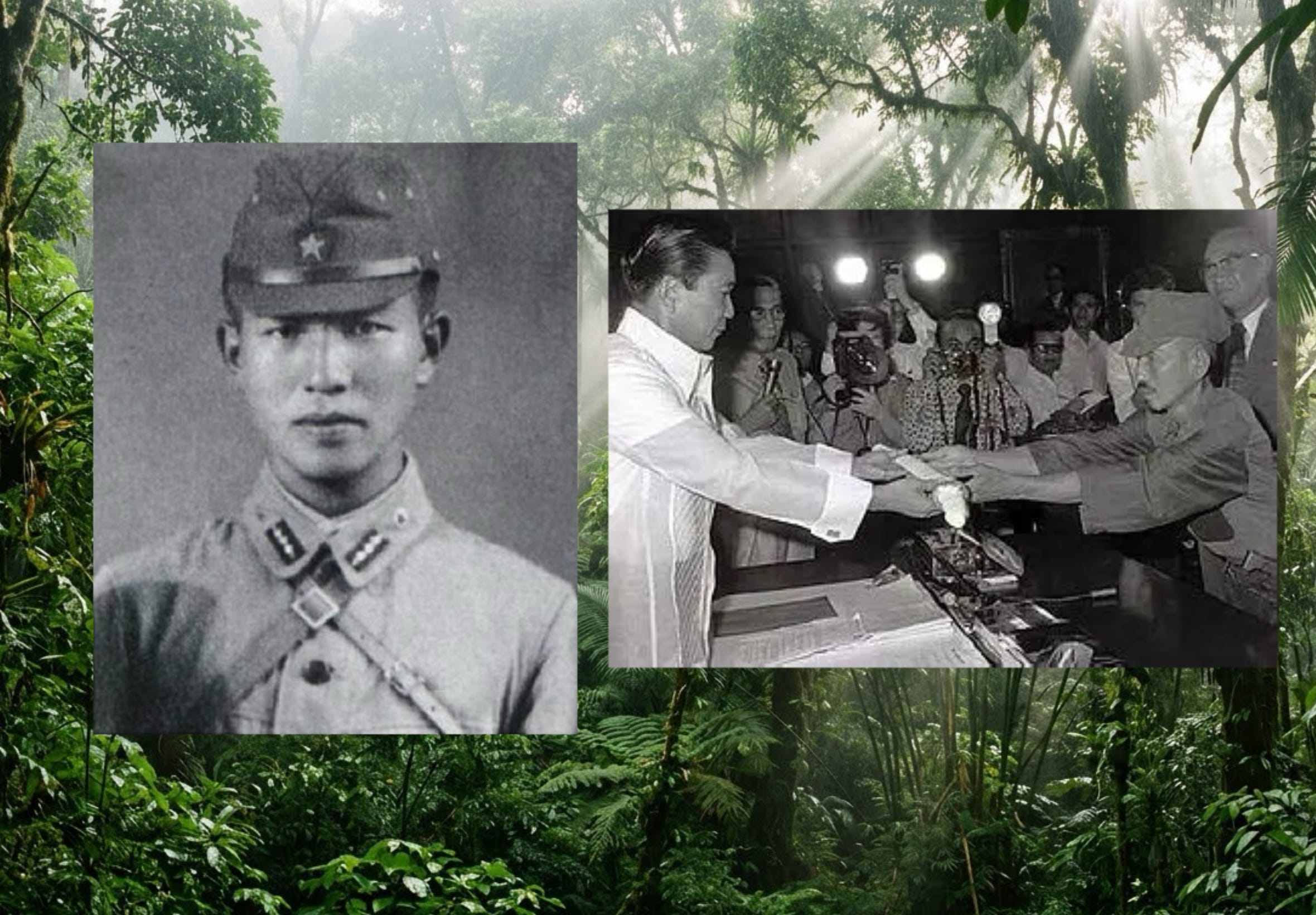
Lieutenant Hiroo Onoda was an Imperial Japanese Army intelligence officer sent to garrison an island in the Philippines in 1944 towards the end of World War II. He left twenty-nine years later.
He was told not to surrender, and he followed his orders to the letter, refusing to resign even after the war ended. Onoda became the second-to-last Japanese soldier to surrender.
Military Induction
Born in Kainan, Wakayama, in central Japan, Onoda joined the Imperial Japanese Army at 18. He was drafted into specialised intelligence training.
The army sent him to Nakano Military School in Tokyo. There, instructors trained and indoctrinated him in guerrilla warfare, history, philosophy, martial arts, propaganda, and covert operations. He received strict orders that he was forbidden from taking his own life under any circumstances.
In late 1944, near the end of World War II, command posted him to Lubang Island, a small landmass in the Philippines near Luzon. His orders were to hold the island at all costs. Originally, commanders asked him to destroy the Lubang airfield and harbour to prevent an Allied invasion.
Within weeks of his arrival, superior officers changed priorities. They needed the harbour and airstrips to evacuate their men instead. Consequently, officers asked Onoda to help with the evacuation rather than destroy the structure.
American Forces
American forces soon attacked and gained control of the island. Allied troops killed, captured, or forced the escape of most Japanese personnel. Major Yoshimi Taniguchi gave Onoda and his three remaining men (Private Akatsu, Corporal Shimada, and Private Kozuka) explicit orders to stand, fight, and never surrender, promising: “It may take three years, it may take five, but whatever happens we’ll come back for you.”
Onoda was twenty-three when he retreated into the jungle. Shortly after, Emperor Hirohito signed the surrender with America. Aircraft dropped leaflets over Lubang informing the soldiers of their nation’s surrender. Onoda dismissed the leaflets as Allied propaganda.
Surviving the Jungle
The four men lived on stolen livestock, bananas, and game within the jungle. They would occasionally steal rice from the local population. It was not long before one of the group became suspicious that the war had ended. Akatsu broke away from the group and spent six months alone in the jungle before surrendering to Filipino forces.
Authorities interviewed Akatsu, who revealed that his three colleagues were still hiding in the jungle. In response, officials dropped family photos and letters into the trees. Again, Onoda dismissed them as propaganda.
The second member to leave the squad was Shimada, whom police officers shot in the leg during a raid on a fishing village; a search party later shot him dead.
Even though the Japanese government officially declared the soldiers dead, Onoda and Kozuka carried on gathering intelligence and engaging in sporadic clashes. They lived in underground caves and killed approximately thirty local villagers over the years, mistaking them for enemy soldiers.
Local police later shot and killed Kozuka whilst he was burning villagers’ rice. News of his death prompted the Japanese government to reassess whether Onoda was still alive and surviving alone in the jungle.
Stand-down Soldier
Norio Suzuki was an eccentric Japanese student who loved adventure. Intrigued by Onoda’s story, he visited Lubang to search for the missing soldier. Suzuki tracked him for four days before coming across Onoda. The two formed a friendship, but Onoda still refused to give up unless he received official orders from a superior.
Back in Japan, government officials located Major Taniguchi, who was working as a bookkeeper, and asked if he would travel to Lubang. Taniguchi travelled into the jungle wearing his official uniform, found Onoda, and rescinded his orders by command of Emperor Showa.
Onoda finally left the jungle at fifty-one after twenty-nine years of fighting. He surrendered his well-maintained service rifle, 500 rounds of ammunition, sword, hand grenades, and a dagger given to him by his mother to kill himself with if captured—creating a sharp personal contradiction with his officer’s strict command against suicide.
Life After Combat
Philippine President Ferdinand Marcos granted Onoda a full pardon for his wartime actions and the killings he committed whilst in the jungle. Onoda was reunited with his family, who had long believed him dead.
He returned to Japan hailed as a hero and published his memoir, No Surrender: My Thirty-Year War. However, he struggled to adapt to modern Japanese society and his sudden fame. He followed his elder brother to Brazil to run a cattle ranch. He married a Japanese woman and lived between there and Japan.
Later in life, he saw young boys getting into trouble and established the Onoda Shizen Juku (Onoda Nature School) in Japan to teach youth survival skills and traditional values.
Onoda died of a heart attack at the age of ninety-one in Tokyo.
Not the Last
Strangely, Onoda was not the only Japanese soldier who took his orders beyond the end of the war.
A group of twenty-one soldiers and sailors persisted in fighting on the island of Anatahan years after Japan’s surrender before they finally turned themselves in.
Teruo Nakamura, a Taiwanese-Japanese soldier, lived in the jungle for twenty-nine years, growing crops alone on the island of Morotai, Indonesia. Authorities arrested and repatriated him to Taiwan in December 1974. Because Onoda surrendered earlier in March 1974, Nakamura is recognised as the second-to-last holdout to be discovered, but the final officially confirmed Japanese soldier to surrender.
There are also unsubstantiated reports of two former Japanese soldiers in their 80s still hiding in the mountains of Mindanao, Philippines, reportedly afraid of being court-martialled for desertion if they give themselves up.
Whilst Onoda is heralded as a hero, it is worth remembering that the residents of Lubang Island have a different view. His refusal to surrender caused decades of atrocious violence and tragic loss of civilian life, further proving that history is written differently depending on the victors.
The Beautiful Beast of Auschwitz

She was one of the most beautiful women I have ever seen. Her body was perfect in every line, her face clear and angelic, and her blue eyes the gayest, the most innocent eyes one can imagine. And yet Irma Grese was the most depraved, cruel, imaginative pervert I ever came across.—Dr. Gisella Perl
Subscribe today: I spend hours digging through archives, old testimony, and forgotten files to bring these cases to life. Free posts are just the beginning, paid subscribers keep this work possible and get access to my full vault of articles.
If you’ve enjoyed this story and want to see more, please consider upgrading. It’s readers like you who keep Murder Mayhem UK alive.
Don’t want to commit then consider leaving me a tip if you enjoyed this article.
