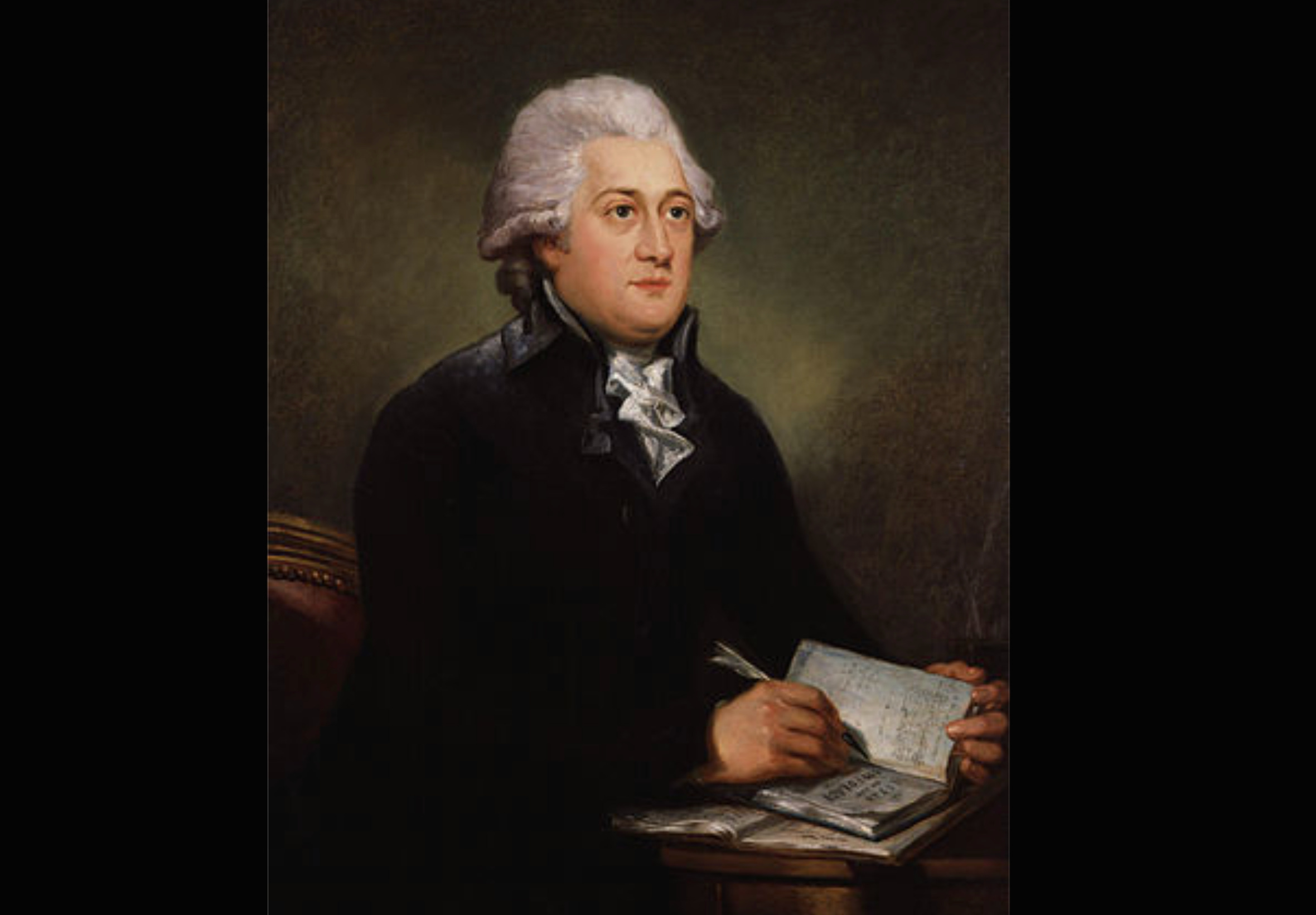
The Moral Architect of Abolition, Thomas Clarkson
A man who paved the way for thousands after him.
The strength it takes to go against the populace is immense, but throughout history, there have been individuals who pushed their heads above the rest to announce, ‘this is wrong.’ Many of those names are lost over time; one of them is Thomas Clarkson.
In the late Georgian era, the British Empire flourished. However, most of its economy was tied to the brutal Atlantic slave trade. Most people considered it a “necessary evil” or ignored the practice completely. To Thomas Clarkson, it became a moral emergency that demanded his every waking hour.
While many books speak of William Wilberforce as the parliamentary voice of abolition, it was Clarkson who researched and evidenced the practice. His work ensured that the public and politicians alike could no longer look away. Clarkson’s investigations changed the conscience of a nation.
Early Life and the Road to Damascus
Clarkson was born on 28 March 1760 in Cambridgeshire, England. The son of a clergyman and grammar school teacher, he seemed destined to join the church, a path his parents and peers fully expected him to follow.
In 1779, he attended Cambridge University, the setting for the moment that changed his life. While there, he entered a Latin essay competition on the prompt: Is it lawful to make slaves of others against their will? Clarkson won the prize, but the research cost him his peace of mind.
This research triggered a profound spiritual crisis. In June 1785, while travelling the road from Cambridge to London, Clarkson found himself haunted by the horrors he had documented. Consumed by these thoughts, he reached Wadesmill in Hertfordshire. There, he dismounted his horse and sat by the roadside in a state of agitation.
This was his ‘Road to Damascus’ moment. He realised that if the contents of his essay were true, then someone had to see the task through to its end. Ending slavery became his singular passion for the next sixty-one years.
Forming the Abolitionist Network
Clarkson was ordained as a deacon, but he abandoned his traditional church career in 1785 to devote himself to activism. His first task was to translate his prize-winning essay into English to reach a wider audience.
An Essay on the Slavery and Commerce of the Human Species was a success, bringing him into contact with key figures like Granville Sharp and William Wilberforce.
In 1787, Clarkson helped form the Committee for the Abolition of the African Slave Trade. The group consisted of nine Quakers and three Anglicans. This composition was strategic: at the time, Quakers were dissenters and were legally barred from sitting in Parliament. Clarkson, as an Anglican, became the essential bridge, carrying the moral fire of the Quakers into the halls of power to win over figures like Edmund Burke and William Pitt the Younger.
The Great Collector of Evidence
Clarkson was a revolutionary researcher. He understood that to defeat a profitable industry, he needed empirical, undeniable proof. He travelled over 35,000 miles on horseback, visiting ports like Liverpool and Bristol to interview sailors and doctors who had witnessed the trade firsthand.
He also collected physical evidence of cruelty. He carried a large leather chest filled with the tools of the trade: leg shackles, thumb-screws, and branding irons. He also gathered samples of African textiles and spices to prove that Africa was a continent of sophisticated trade, not just a source of ‘human cargo.’ (You can see more of these artefacts in our Monday article.)
He cultivated allies among the formerly enslaved, most notably the writer Olaudah Equiano, whose autobiography Clarkson helped promote. Much later in life, he lent his significant moral authority to the campaign supporting Frederick Douglass during his tour of Great Britain, standing as a link between the old and new generations of abolitionists.
Consumer Activism and Global Outreach
Clarkson realised that the movement had to hit the pockets of the plantation owners. He pioneered the consumer boycott, a tactic we still use today.
The movement made the cost of sugar visceral. One famous abolitionist slogan stated, “In every pound of sugar used, we may be considered as consuming two ounces of human flesh.” This campaign prompted over 300,000 Britons to give up sugar in protest.
Women were the backbone of this network. Barred from voting or formal politics, they used their power as consumers to drive the sugar boycott and organised massive petitioning campaigns. They saw a parallel between their own lack of legal rights and the plight of the enslaved, creating a foundation for female activism that would eventually lead to the suffrage movement.
Clarkson’s vision was global. In 1789, he travelled to Paris to lobby the new French Revolutionary government. Although the French stood firm at the time, Clarkson’s efforts ensured that abolition remained an international conversation.
Victory and Later Years
The campaign reached a milestone in 1807 with the passing of the Slave Trade Act, which outlawed the trading of people. In 1808, Clarkson published a definitive two-volume history of the movement to ensure the struggle was never forgotten.
His work continued long after. In 1815, he influenced the Duke of Wellington and Viscount Castlereagh to seek a European-wide condemnation of the trade.
When the Anti-Slavery Society was founded in 1823 to target the institution of slavery itself, Clarkson was chosen as a vice president. Despite his failing health, he lived to see the 1833 Slavery Abolition Act, which finally granted freedom to enslaved people across the British colonies.
A Blueprint for Change
Clarkson’s life serves as a blueprint for modern activism. He proved that moral outrage is insufficient without rigorous evidence and strategic alliances.
By bridging the gap between religious conviction and political machinery, he turned a fringe cause into a national mandate. The combination of his chest of evidence and the consumer boycotts eventually made the slave trade politically and economically untenable.
Clarkson did not only wish for a better world; he spent sixty-one years ensuring that the ‘evil’ he first recognised on that roadside at Wadesmill was finally struck from the law of the land.
Be sure to check out our article on Monday where we look at the evidence he collected.
Until next Wednesday: Stay safe, stay curious.


“In every pound of sugar used, we may be considered as consuming two ounces of human flesh."
This reminds me of the Monty Python sketch where a coffee brand is advertised as "Conquistador Instant Leprosy".