

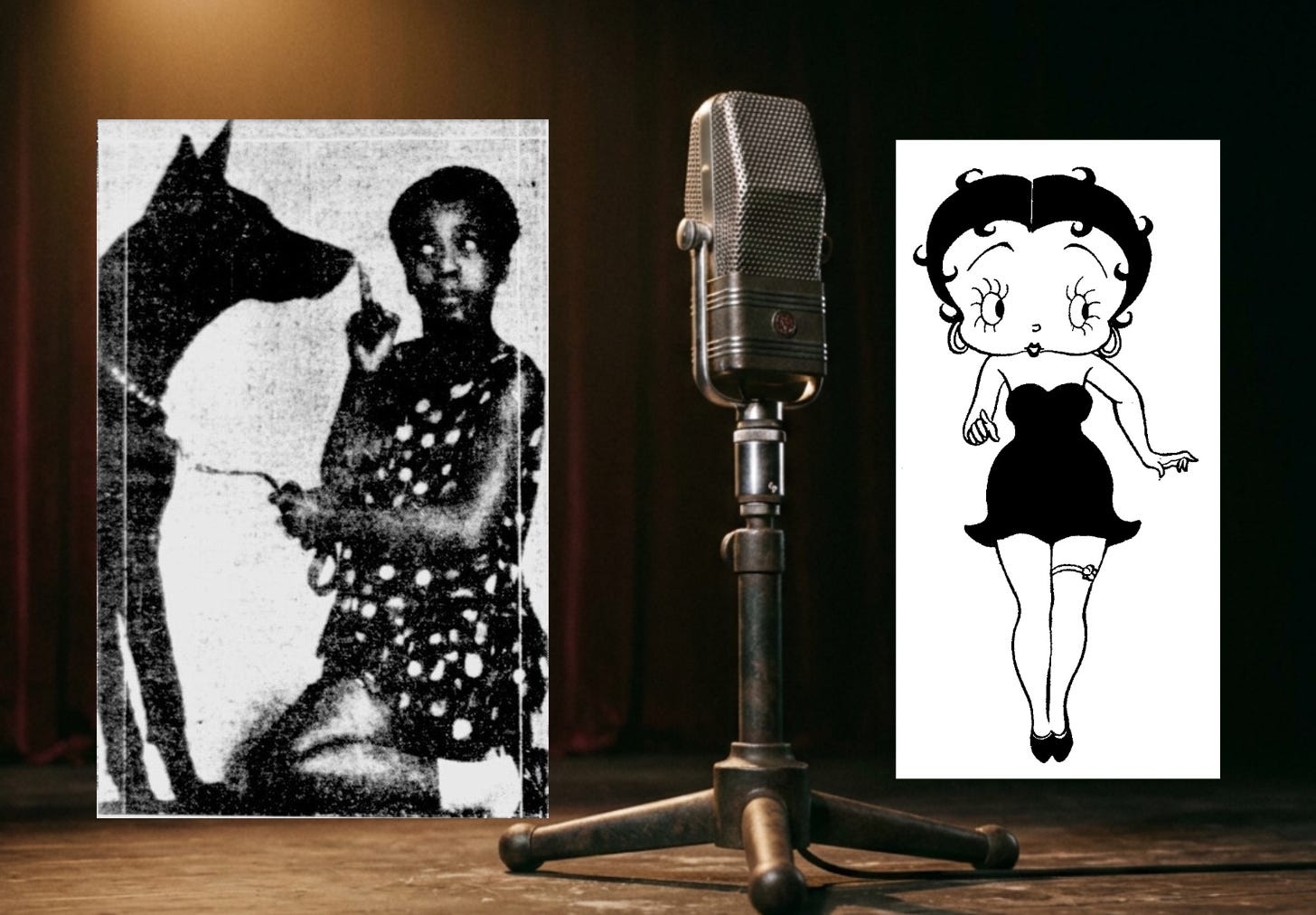
The world knows Betty Boop. She’s one of the most recognisable cartoon icons of all time.
But what most people don’t know is that Betty Boop was modelled on a young Black child star called Esther Jones. Known on stage as Baby Esther, she created the style and voice that made Betty famous. Yet Jones received no royalties or recognition; over time, her name was almost erased from history.
The Hidden Star Behind the Cartoon
Throughout the 1920s and 1930s, Baby Esther wowed audiences with her singing, dancing, and signature phrase: Boop boop-a-doop.
She was a trained scat singer, dancer, and acrobat, often compared to a miniature Florence Mills. Born in Chicago around 1919 or 1920, Esther’s parents initially managed her career. However, after she won a Charleston contest, talent manager Lou Bolton stepped in and propelled her onto bigger stages.
By 1928, she was performing in New York on the same bill as Helen Kane, who later adopted Esther’s vocal style and claimed it as her own. That same year, Esther appeared in a Movietone short film, though the footage has never resurfaced. At the time, the Chicago Defender reported that she was the highest-paid child star in the world.
From the USA to the Moulin Rouge
Baby Esther’s career took her far beyond the United States. In the early 1930s, she toured Europe to rave reviews, even performing at the legendary Moulin Rouge in Paris.
Although newspapers described her as just ten years old, her real age remains uncertain because show business managers frequently altered child performers’ ages for publicity. Whether older or younger, Esther was undoubtedly a child prodigy.
Racism on Tour
Esther’s fame cut across racial lines, with fans of every background eager to meet her. Yet racism was never far away.
While touring Sweden, a restaurant refused to serve Esther and her mother simply because they were Black. The incident caused severe public outrage, generating a backlash so strong that the establishment was eventually forced to close its doors.
Moments like this highlight the harsh contradiction of her fame: she could be idolised on stage yet discriminated against the moment she stepped off it.
The Lawsuit That Changed Everything
Returning to the American media landscape, a major conflict erupted in May 1932 when actress Helen Kane sued cartoonist Max Fleischer, claiming Betty Boop was based on her image and voice and demanding royalties.
Evidence in court quickly exposed the truth. Kane had watched Baby Esther perform years earlier and copied her style, while Fleischer had also seen Esther’s act in 1928. A sound recording of Esther performing confirmed she was the true origin of the boop-a-doop delivery.
The court ruled in Fleischer’s favour, meaning Kane received nothing. Tragically, Esther the real inspiration behind the phenomenon, was never officially credited or compensated either.
Fading Into Obscurity: What Became of Baby Esther?
What happened to Esther Jones after her brief stardom remains unclear, as historical reports conflict sharply. Some sources state she became a full-time acrobat before being replaced by newer child stars.
Others suggest she retired in 1934 after marrying and founding a Harlem dance troupe, while separate accounts contend that she died that same year.
Reports also exist in Harlem World claiming she lived until 1984, passing away from complications related to drug use. However, historians note that this 1984 passing almost certainly stems from a case of identity confusion, as journalists frequently conflated Baby Esther Jones with the R&B singer Little Esther Phillips (born Esther Mae Jones). The one thing we know for certain is that we have no definitive answer regarding her final years.
The truth of her later life remains clouded, deepening the injustice of how little she is remembered.
Why Her Legacy Matters
The confusion surrounding Esther’s story is partly due to sloppy reporting, with journalists mixing her up with Little Esther. It is also the result of misinformation deliberately spread by Helen Kane’s supporters to discredit Esther and protect Kane’s claim to Betty Boop’s fame.
Whatever the details, one fact is clear: Baby Esther was the original voice and spirit of Betty Boop. The fact that she was erased from the narrative reflects the deep racism of the entertainment industry an industry quick to exploit Black creativity whilst denying Black performers their rightful place in history.
Esther Jones deserves recognition not only as the hidden figure behind a cartoon icon, but as a symbol of how Black talent shaped popular culture, even when society tried to write it out of the story.
The Enigma of Christopher Marlowe

Christopher Marlowe has always held a special place in my heart. It isn’t just because of his legendary status in English literature, but a more personal connection: he was born and raised right in the area where I live. I’ve spent many an evening at the Marlowe Theatre, named in his honour, watching pantomimes and plays in the very city that shaped him.
Great article! I had no idea about this history, and that makes me really sad. I'm reminded of the outrage I felt when reading The Immortal Life of Henrietta Lacks.
My vision is blurred with tears. We haven't come all the way out of racism, but we've come to appreciate and compensate black stars. Will the US ever be free of racism? I cannot imagine it happening in my lifetime. And that brings tears to me.