

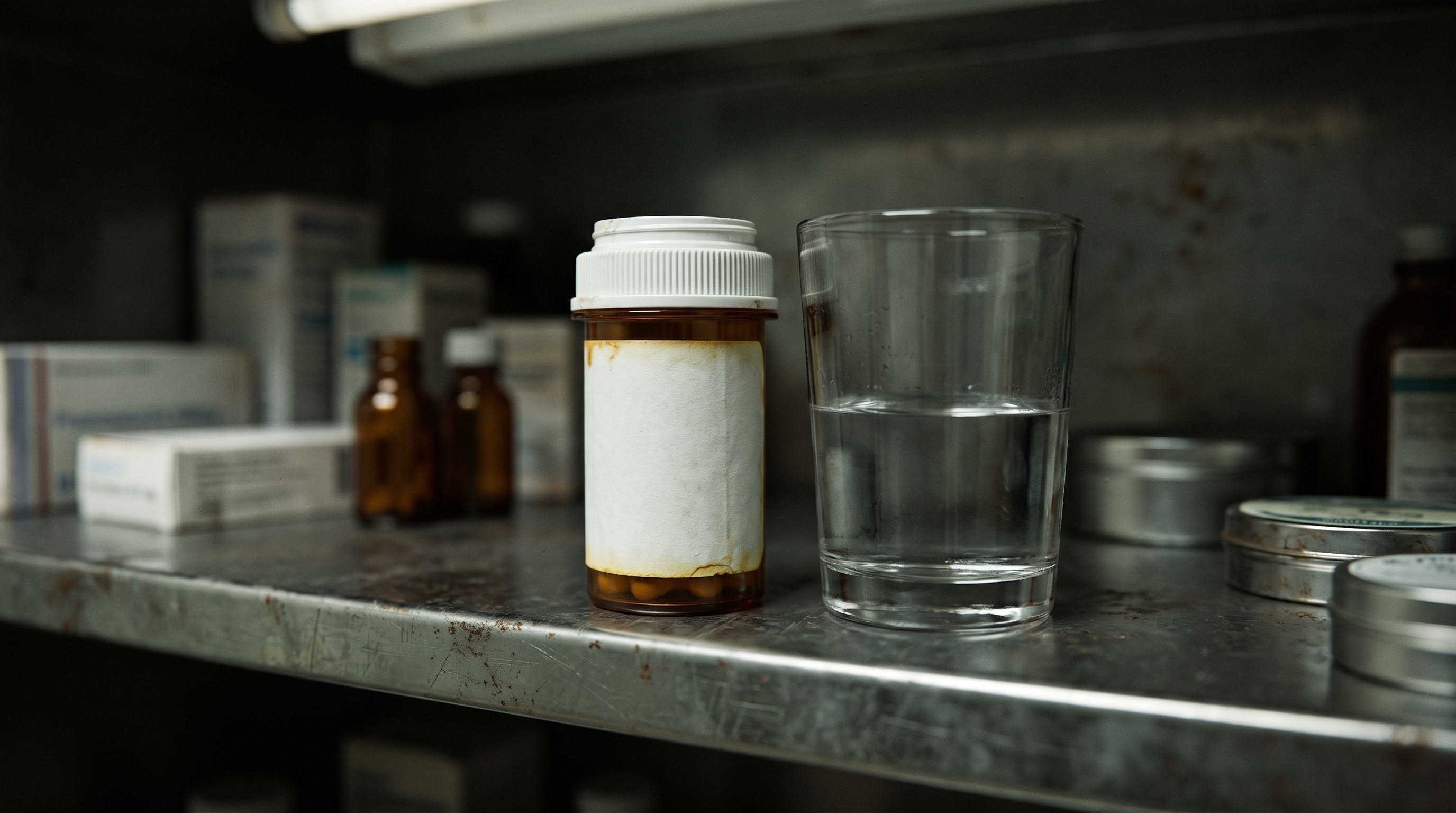
Many of us have grabbed the painkillers off the shelf without a second thought. That is exactly what happened to these victims; however, with terrible consequences.
On September 29, 1982, a seemingly ordinary day in Chicago ended in a mass murder by an unidentified assailant.
Seven random victims were poisoned with cyanide that was contained in their Extra Strength Tylenol. The authorities would like everyone to believe that this was a random madman killing people; however, the truth may be scarier. Was this a corporate incident covered up by the very people meant to be investigating the crime?
Why commit such a crime?
Mass murders are often carried out by people who simply snap one day. Some plan their operations, and if this was the work of a lone perpetrator, that was certainly true in this case.
There could be many reasons for the crime. Perhaps the person held a grudge against a group of people. Or, they may have had mental health problems that caused them to snap under pressure from an unknown personal circumstance.
All of these may be true for these murders, or none of them. With no physical evidence and a frustrated local police department, we may never know. The FBI provided no additional help in solving the murder; was this deliberate?
The Tylenol murders had far-reaching implications for the pharmaceutical industry. Tamper-proof bottles were adopted after this case.
The ‘why’ of this case remains the least investigated. Was it a lone madman or a disgruntled employee of Johnson & Johnson? We’ll never know. This fact has led many questioning whether the case was a cover-up to absolve the pharmaceutical giant of financial liability.
The Victims
The first victim was twelve-year-old Mary Kellerman, who had awoken feeling ill. Her parents had kept her off school and given her a Tylenol to ease her symptoms. Her father, Dennis, states that he heard her go to the bathroom and then something drop. When he tried to rouse her, he could not.
He opened the door and found her unconscious on the floor; unable to wake her, he called 911. The paramedics tried several drugs to bring her round, but none were successful. She was transferred to the hospital and pronounced dead at 9.56. Her body was called for autopsy because of her age and the circumstances, but foul play was never considered, so it was missed.
The next victim was Adam Janus; he was twenty-seven. After picking his children up from nursery, he stopped to pick up some Tylenol. He took a couple of painkillers and was unconscious on the kitchen floor almost immediately. He died soon after, with his death being attributed to cardiac arrest.
His distraught wife and relatives returned to the house. His younger brother and his brother’s girlfriend, distraught and with a headache, took some of the Tylenol; within minutes, both of them had collapsed too.
Lynn Reiner had just given birth to her fourth child. Feeling the effects of childbirth, she took some Tylenol. Ed Reiner arrived home and found his wife unconscious on the floor; he called 911, and she was pronounced dead at 9.30. Mary McFarland was working when she went into the back room to take some Tylenol and was found unconscious moments later.
The last victim was flight attendant Paula Prince, who was found dead when she failed to turn up for a dinner date with her sister. She had purchased Tylenol after landing from her latest flight.
Investigation
Fire chief Paul Cappitelli and fire investigator Richard Keyworth listened to the responders’ messages throughout the day and noticed they all mentioned Tylenol. They informed Nurse Jensen, who retrieved the bottle from the Janus house and sent it for testing.
What came back was shocking: each capsule of Tylenol contained 65mg of cyanide—between 100 and 1000 times the dose needed to kill a person.
All the crimes were connected; the state had a mass murderer on their hands who used Tylenol as Russian roulette bullets. A task force was set up by the FBI, with the authorities’ major concern being that more cases would happen.
The murders became international news on 4th October. Johnson & Johnson, although reluctant at first, recalled 31 million bottles of Tylenol, costing the company $100 million. Overall, eight more bottles were discovered with fifty capsules of cyanide across five different stores. It may have been higher, as citizens were advised to throw all bottles away, so there is no way of knowing if any of these were poisoned or not.
It seemed a real possibility to everyone that the capsules could have been tampered with in the production plant. However, the media went into action convincing everyone that this was the work of a lone madman who had purchased the capsules, laced them with cyanide, and returned them to the shelves for purchase.
Though there was a problem with this theory.
Lynn Reiner, discharged from the hospital, didn’t buy her Tylenol from the pharmacy. It was impossible tamper with the tablets there. This was either ignored or argued to be a different bottle.
The investigators followed thousands of leads, none leading to any evidence or a suspect. Every suspect was cleared completely of any wrongdoing, even, in one case, one of the victims’ husbands.
Johnson & Johnson
On 6th October, Johnson & Johnson received an extortion letter demanding $1 million to stop the poisonings. The letter was traced to a conman, James William Lewis, who had tried to extort money out of the company but had nothing to do with the poisonings.
On 23rd September 2011, Scott Bartz published The Tylenol Mafia: Marketing, Murder and Johnson and Johnson. Bartz was a former Johnson & Johnson employee with years of experience in the pharmaceutical industry. In the book, he claims that Johnson & Johnson controlled the investigation into the poisonings with the help of the FBI.
After three years of research, he analysed over 8000 documents and found evidence of tampering during the distribution and packaging process. To protect their reputation and avoid financial liability, Johnson & Johnson actively influenced both the authorities and the media to focus on the lone madman theory.
This was when the information about Lynn Reiner came to light. Her daughter stated that the Tylenol had been obtained by her mother from the hospital pharmacy. Her daughter, Michelle, had been eight at the time of the death, too young to sign the gag order Johnson & Johnson asked the victims’ families to sign.
The Aftermath
This story becomes much easier to believe now that we are all aware of the influence big pharmaceutical companies have in politics, law, and the media.
Only one per cent of the capsules were ever tested for cyanide; the rest were destroyed. At the time of writing, no one has ever been charged with the Tylenol poisonings. In 2013, the FBI formally stood down from the investigation, sending it back to local law enforcement.
Bartz’s theory was never investigated by the FBI or Johnson & Johnson.
Johnson & Johnson has never commented on the theory in Bartz’s book.
Be sure to check out our deep dive article on Monday, where we look at a case in Illinois that happened four years later with startling similarities.
If you’ve enjoyed this story and want to see more, please consider upgrading. It’s readers like you who keep Murder Mayhem UK alive.
Don’t want to commit then consider leaving me a tip if you enjoyed this article.

Gag order says it all. Very corrupt industry.
The idea that a J&J employee did it seems like the most plausible explanation, otherwise why would the company have taken steps to cover it up?