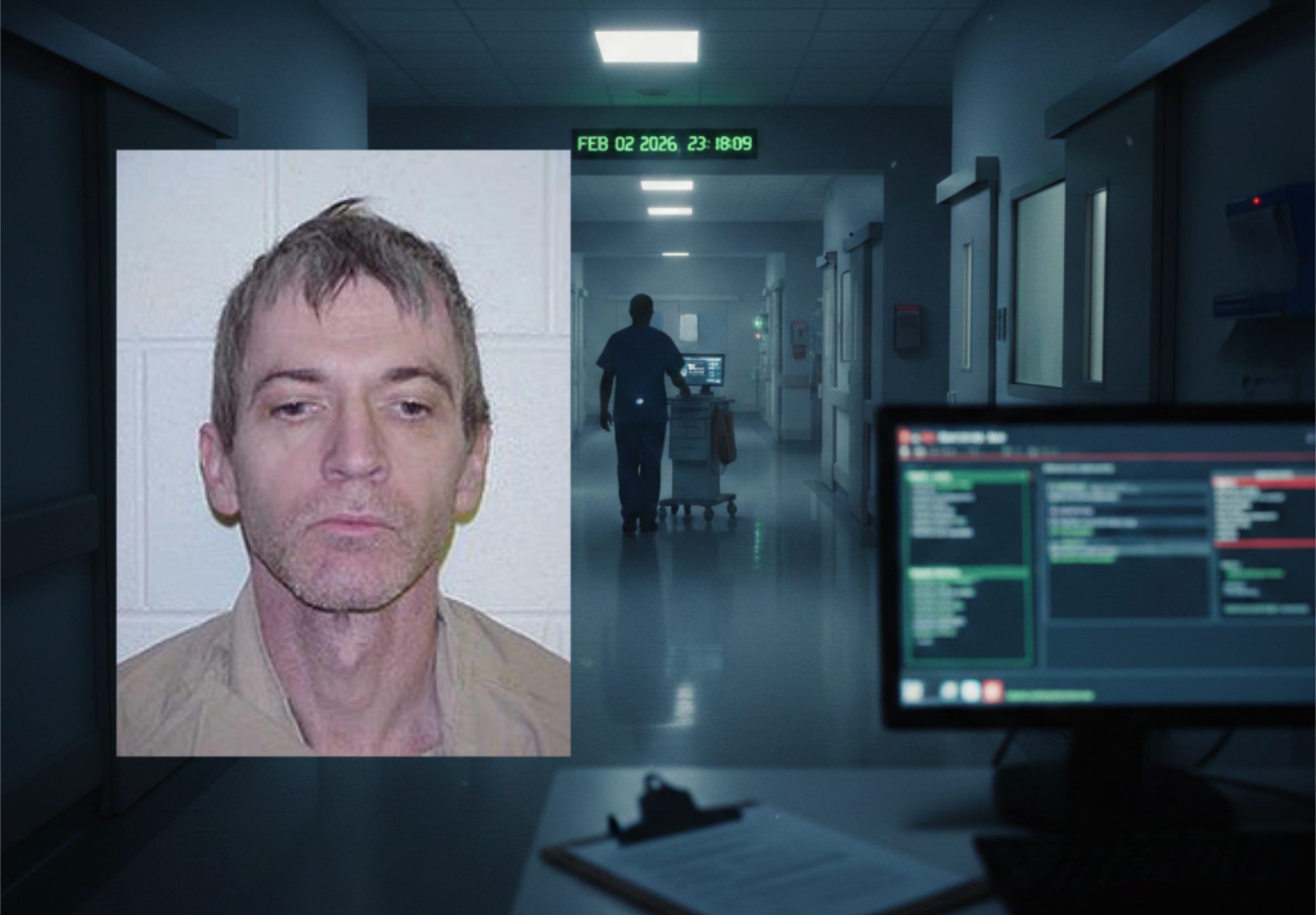
The Women Who Stopped Charles Cullen
One of the most prolific serial killers in the medical profession.
Charles Cullen was one of the most prolific serial killers in history, but this article is not just about him; this article is also about the courageous women who brought him to justice.
Amy Loughren was a nurse working night shifts in a US hospital’s critical care ward. She had been working mainly with her colleague and close friend, Cullen. We can only imagine what she felt when she made the devastating discovery that he was harming patients.
When she made the discovery, she had no way of knowing that she was about to uncover one of America’s most notorious serial killers.
She was obviously apprehensive about bringing him to justice. They were friends; what if she had got it wrong? Many of us have faced these decisions when friends lie to us. She was also worried about her safety and that of her family. Uncovering a serial killer is dangerous, even if they are your friend.
Ultimately, it was her daughter, who was only eleven at the time, who convinced her to go to the police.
Charles Cullen
Cullen did not have an easy path in life, especially into medicine; his path was marked by tragedy and instability. He was born the youngest of eight children and had a miserable childhood.
His father died when he was young and his mother passed away when he was a teenager. Two of his siblings then passed away shortly after. Cullen went on to care for his brother during his fight with cancer, which he eventually lost.
All of these factors helped to make Cullen a loner in school who was bullied and ostracised. He dropped out of high school, joining the US Navy. Serving as a missile technician on a nuclear submarine, the bullying and isolation continued, this time at the hands of his crewmates.
At the end of his service, he decided that nursing was the path for him and attended the Mountainside Hospital School of Nursing in Montclair, graduating in 1987.
He was now married with two daughters and starting his nursing career, a career that would span sixteen years across various hospitals in New Jersey and Pennsylvania, ultimately leading to many deaths.
Domestic Turmoil
When you look at his employment history, you have to wonder why he was not caught earlier. However, as with many of these killers, a mix of bureaucracy and those trying to cover their own backs meant he could escape scrutiny.
From the start of his career, though, he was considered a criminal liability. His employment history shows a patchwork of accusations involving the mishandling of medications, harassment of colleagues, and suspicious patient deaths, leading to multiple sackings.
His personal life was also volatile. In January 1993, his wife, Adrienne Taub, filed for divorce and contacted the police, stating she was afraid of him. She filed a domestic violence complaint detailing disturbing behaviour, such as stuffing their family pet ferret into a trash can and burning his daughter’s books.
Adrienne also stated that she believed he had been spiking people’s drinks with lighter fluid.
Despite these reports, a judge denied a restraining order, dismissing his actions as nothing more than odd behaviour.
After his divorce, Cullen’s life spiralled as he battled with mental illness, financial problems, and alcohol abuse. It is reported that he even attempted to commit suicide several times.
The Killing Spree
It is hard to pinpoint when Cullen started murdering, but his first confirmed murder occurred in 1993 at Warren Hospital in Phillipsburg, New Jersey, where he administered fatal doses of digoxin to Lucy Mugavero, Mary Natoli, and Helen Dean.
Helen Dean, shortly before dying, informed her family that a male nurse had injected her. Despite this, the judge ruled her death was due to cancer; no investigation followed and Cullen resigned.
Over the next nine years, Cullen would move from hospital to hospital, avoiding any criminal investigation.
He obtained the medication he used to kill by exploiting a vulnerability in the ‘Pyxis system.’ Pyxis is a computerised drug dispensing machine. Cullen discovered that if you entered an order into the machine but then cancelled it immediately, the drawer would still open. You could then take the lethal medications to kill without leaving a digital trail.
Armed with this medication, he would roam the units looking for vulnerable patients with ‘do not resuscitate’ orders or those in multiple organ failure and administer the medication to them.
Systematic Failures
As we heard in the case of Christopher Duntsch, a flawed regulatory system allowed Cullen to continue killing.
At the time, hospitals did not effectively share information, allowing Cullen to leave one facility under a cloud of suspicion and find employment at another.
It was not just Amy who was suspicious of his behaviour; in 2002, a nurse at St. Luke’s contacted the police with concerns that Cullen had killed as many as sixty-nine patients.
An investigation of nine months was undertaken with police interviewing Cullen, but the case stalled. In December 2003, at Somerset Medical Center, officials noticed an alarming number of deaths involving high levels of digoxin. They carried out an internal review, fired Cullen, and alerted the authorities.
Amy Loughren
The police placed Cullen under surveillance and then approached Amy to help provide the evidence they needed. Risking her own safety, she agreed to wear a wire and meet Cullen at a bar in Bridgewater, New Jersey.
She confronted him, saying: “I know you did it. Let’s go to the police station.”
Cullen did not admit what he was doing and left shortly after; however, the police were convinced that what he had said was enough evidence for probable cause.
On 12th December 2003, he was arrested for one count of murder and one count of attempted murder. The police had a task to prove anything more. However, the next day, Cullen shocked them by confessing to many more murders. To avoid the death penalty, he agreed to cooperate with the investigation.
The Legacy of the Victims
Despite much manipulation during the trial, including Cullen negotiating to be a live donor for a friend’s daughter, he was eventually sentenced to eleven consecutive life terms.
Throughout his trials, Cullen often pretended to sleep to avoid looking at the families of his victims. He stated that his killings were all ‘mercy killings’ to end the patients’ suffering. However, this can be debunked by the fact that some of his victims were not terminal, including a twenty-one-year-old in for a routine surgery.
He officially pleaded guilty to twenty-two murders and three attempted murders in New Jersey, and later seven more in Pennsylvania. The true death toll is unknown. Cullen himself has boasted of killing forty people, but he is not a reliable source with his heavy drinking. Investigators speculate the actual number could be as high as 400, which would make him the most prolific serial killer in recorded history.
Amy Loughren remains dedicated to ensuring the focus stays on the lives lost rather than the man who took them.
“All of those victims had no voice, I wanted them to have a spotlight…I wanted those victims and the families that were robbed of the opportunity to get better, I wanted them to have a voice.” - Amy Loughren
Be sure to check out our deep dive article on Monday, where we look at another medical professional who killed, Donald Harvey.
Until next Wednesday: Stay safe, stay curious.


Amy was especially brave, given that she had some serious medical issues of her own and was concerned she might lose her health insurance (and job) if her employer found out. Cullen covered for her at work on more than one occasion.