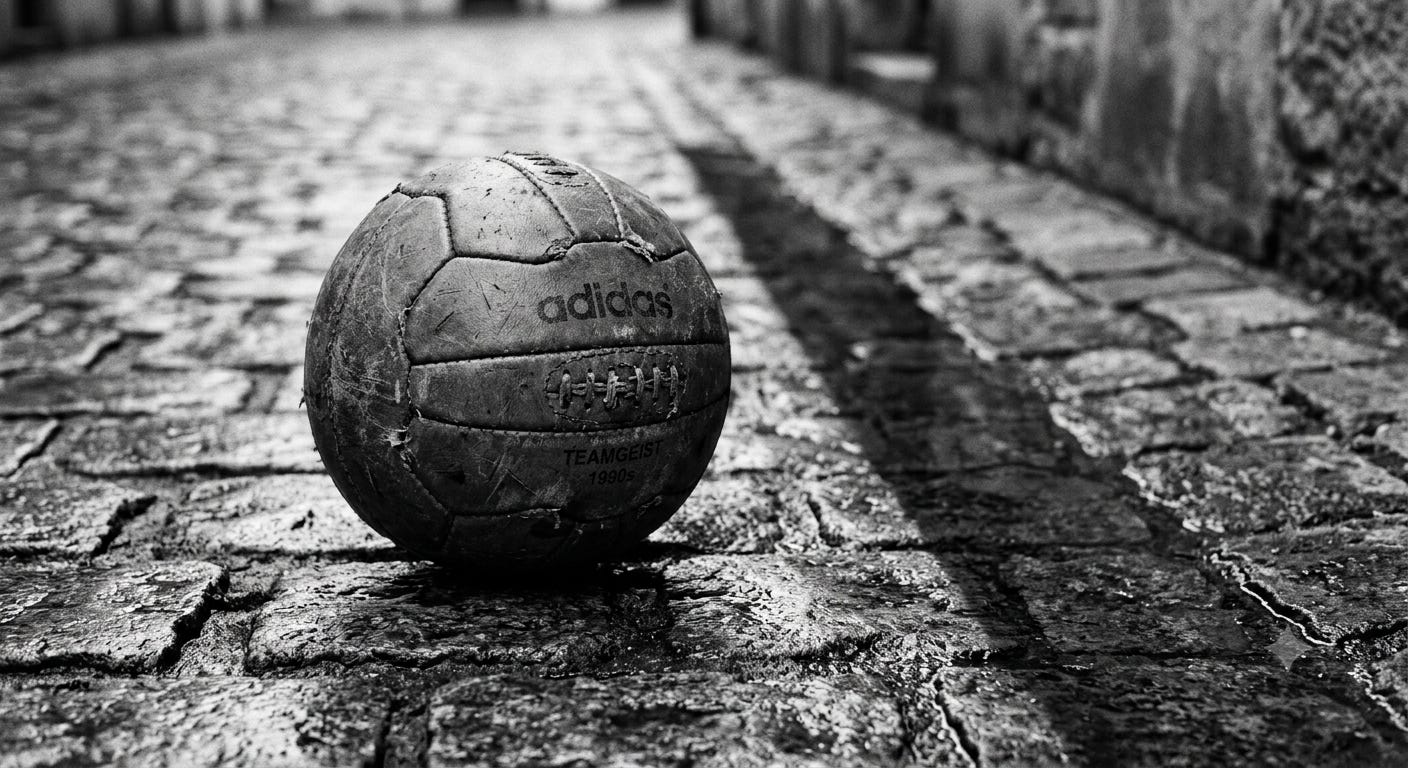
World Cup Fever has hit us all. England have made the semi-final and tonight will play for a chance in the final against Argentina. I will keep my prediction on this to myself, to save upsetting anyone.
But as current excitement builds, we cannot forget the darkest times when football and violence collided.
The World Cup has been filled with its fair share of tragedy, and I am not talking about your national team getting knocked out. I am talking about murder in two distinct cases, one today, one Monday, where the World Cup became the catalyst for murder.
Italy v Ireland
It was the 18th June 1994 when Ireland faced Italy in the group stages. Against the odds, Ireland went on to win the match 1-0, and Irish pride was bursting. One of the areas where the historic match had been watched was a small, rural pub in Loughinisland, County Down. The euphoria was soon to turn to horror.
The pub was not in a controversial area. The pub boasted a clientele of both religions, and the atmosphere was generally welcoming and calm.
The second half of the game was underway when two gunmen from the UVF (Ulster Volunteer Force) burst into the pub. One was armed with an AK-47, the other a Czech-made rifle; they opened fire on the unsuspecting fans.
The gunmen killed six people before laughing as they left. One of the victims, Barney Green (87), was the oldest person killed in the conflict. Five other people sustained gunshot wounds but survived. All the victims were Catholic.
Background
The violence appeared random, but soon the full picture was revealed. This was a revenge killing. Two days before the match, the Irish National Liberation Army (INLA) had killed three UVF members in Belfast.
The day before the match, a Catholic taxi driver and one Protestant had also been shot in retaliation by the UVF. The UVF made a mistake, thinking that all the victims were Catholic.
The mass murder was investigated, but no one was ever arrested for the killings in the pub. The families of the victims started to suspect that the police had colluded with the UVF in the attack.
This became more believable when a Special Branch member was linked to the getaway car, and intelligence warned the suspects of arrest. The police then destroyed the getaway car just ten months after the attack.
Justice
In 2006, after much campaigning by the families, the court ruled that there was a “severe failing” of the police. They stated that the police had not investigated the shooting properly and to the full extent of the law, although they never cited any direct collusion.
Shortly after, the High Court quashed the report and ordered a new investigation.
The 2014 investigation was widely rejected by the victims’ families and branded a “whitewash”. The ombudsman then investigated again in 2016. Dr Maguire started from scratch, taking a broader strategic look at the local loyalist paramilitary unit and the importation of the weapons used.
2016 Report
The landmark 2016 report delivered a damning verdict, officially concluding that collusion was a “significant feature” before, during, and after the murders.
It found the Royal Ulster Constabulary (RUC) Special Branch possessed reliable intelligence regarding the local Ulster Volunteer Force (UVF) unit but failed to pass it to the active detectives. They actively prioritised protecting state informers over bringing the killers to justice.
Special Branch identified the primary suspects within 24 hours. However, delays meant arrests weren’t made for a month. Intelligence later revealed that a police officer had leaked information to the suspects, warning them of the impending arrests.
It further found that key evidence, including the red Triumph Acclaim getaway car, was prematurely destroyed by police, ruining future forensic opportunities.
Following the publication of the 2016 report, retired police officers launched a high-profile legal challenge attempting to have the report quashed, arguing that the Ombudsman had overstepped his powers by explicitly accusing officers of “collusion”. However, the report stood firm after senior judges ultimately rejected the challenge.
Today
The case remains highly relevant in the Northern Ireland Assembly. In political debates, representatives continue to cite the Loughinisland report as the textbook template of “collusion, concealment, and protecting agents.”
To this day, despite the extensive exposure of institutional cover-ups, no one has ever been successfully charged or convicted for the murders.
A monument to the victims sits outside Macartans Church.
Be sure to check out our deep dive article on Monday, where we look at the player who lost his life for an own goal.


I can't possibly think of the Country Down without this coming up in my mind: https://www.youtube.com/watch?v=I3sOqERyI60
...although I doubt anyone, save maybe the UVF guys after they laughed and left the pub, was singing it the whole time that mismanaged fiasco was occurring.